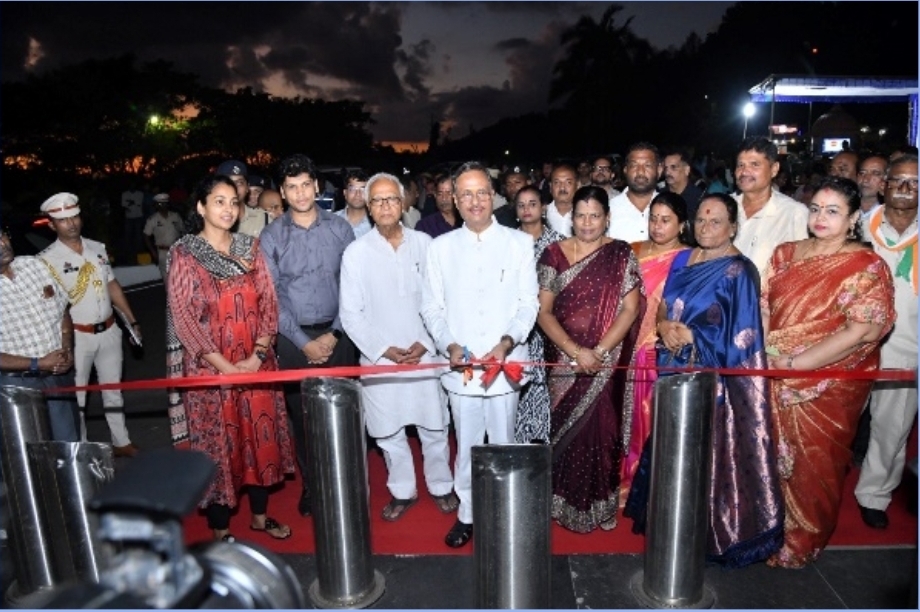
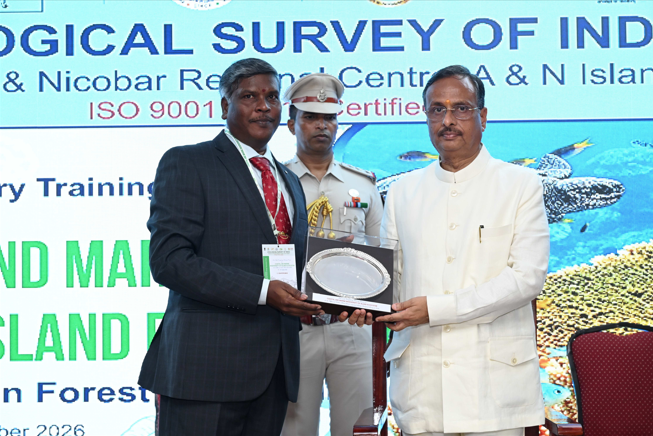
The Hon’ble Lieutenant Governor of Andaman and Nicobar Islands, Prof. (Dr.) Dinesh Sharma, inaugurated a one-week compulsory training programme on “Coastal and Marine Biodiversity of Island Ecosystem” for Indian Forest Service (IFS) officers on October 12, 2026, at Mansha Regency, Phoenix Bay, Sri Vijaya Puram. The programme is being organised by the Zoological Survey of India (ZSI), Andaman and Nicobar Regional Centre, Sri Vijaya Puram.
Addressing the gathering, the Hon’ble Lieutenant Governor emphasised the importance of continuous learning, capacity building and professional development among Indian Forest Service officers. He observed that training programmes provide valuable opportunities for experienced officers to enhance their knowledge, strengthen practical skills and develop a broader understanding of emerging environmental challenges.
Highlighting the rich biodiversity and ecological significance of the Andaman and Nicobar Islands, Prof. (Dr.) Sharma described the archipelago as a unique ecological region characterised by diverse terrestrial, coastal and marine ecosystems. He underscored the vital role of mangroves, coral reefs, seagrass meadows, estuaries and lagoons in maintaining ecological balance, supporting biodiversity and protecting coastal environments. He also drew attention to the growing threats posed by climate change, sea-level rise, habitat degradation and anthropogenic pressures on fragile island ecosystems.
The Hon’ble Lieutenant Governor stressed the need to strike a balance between developmental activities and environmental conservation, particularly in the context of infrastructure development, tourism and the sustainable utilisation of natural resources. He emphasised that biodiversity conservation must go hand in hand with respect for the traditional knowledge, cultural heritage and livelihoods of indigenous and local communities.
Encouraging active participation in the training programme, he urged the participating IFS officers to make effective use of technical sessions, field visits, group discussions and interactive learning opportunities. He highlighted the importance of sharing professional experiences and best practices among officers from different states and regions to strengthen conservation planning and ecosystem management.
He further advised the organisers to systematically document the lectures, field observations, discussions and recommendations emerging from the programme and compile them into a comprehensive report for future reference and practical application.
Referring to the national vision of Viksit Bharat 2047, the Hon’ble Lieutenant Governor emphasised that biodiversity conservation, climate resilience and sustainable natural resource management are integral to achieving the country’s long-term developmental goals. He called upon the participating officers to view the training programme not merely as a mandatory professional exercise, but as a collective responsibility towards conserving and sustainably managing India’s natural heritage.
Concluding his address, Prof. (Dr.) Sharma expressed confidence that the programme would enhance the scientific understanding, professional competence and practical knowledge of the participating officers, enabling them to contribute more effectively to biodiversity conservation and sustainable ecosystem management. He extended his best wishes to all the officers for a productive and enriching training experience.
Earlier, Dr. C. Sivaperuman, Scientist-F and Course Director, Zoological Survey of India, welcomed the Hon’ble Lieutenant Governor, distinguished dignitaries, resource persons and participating IFS officers. In his welcome address, Dr. Sivaperuman highlighted the rich legacy of the Zoological Survey of India and the significant contributions of its Andaman and Nicobar Regional Centre to faunal exploration, biodiversity documentation, scientific research and conservation. He outlined the objectives of the one-week training programme, emphasising the need to strengthen scientific understanding, practical skills and management strategies for the conservation of coastal and marine biodiversity.
He informed the gathering that 51 IFS officers from various states and Union Territories are participating in the programme. The participating officers represent AGMUT and the states of Assam, Bihar, Chhattisgarh, Gujarat, Haryana, Himachal Pradesh, Jammu and Kashmir, Jharkhand, Karnataka, Madhya Pradesh, Maharashtra, Manipur, Nagaland, Punjab, Rajasthan, Sikkim, Tamil Nadu, Telangana, Tripura, Uttar Pradesh and Uttarakhand.
The course includes technical sessions, field exposure and interactive discussions designed to provide participants with a comprehensive understanding of island ecosystems and the challenges associated with coastal and marine biodiversity conservation. Dr. Sivaperuman also highlighted the Centre’s achievements in capacity building, skill development and public awareness of biodiversity, reiterating the ecological significance of the Andaman and Nicobar Islands as a unique region supporting rich terrestrial, coastal and marine biodiversity.
The inaugural day featured technical sessions addressing various aspects of coastal and marine biodiversity conservation and management.
Dr. C. Sivaperuman delivered a lecture on “Island Biodiversity – A Journey Through Unique Ecosystems,” highlighting the distinctive ecological characteristics and biodiversity of island environments. This was followed by a lecture by Dr. K. Sivakumar on “Introduction to Management of Coastal and Marine Biodiversity in India: Challenges and Prospects,” which addressed key conservation challenges and management approaches. Dr. Deepak Apte delivered an insightful lecture on “Intertidal Marine Biodiversity, Conservation and Challenges,” focusing on the diversity of intertidal ecosystems and the challenges involved in their conservation. Subsequently, Dr. S. Dinesh Kannan delivered a lecture on “Sustainable Management of Biodiversity of Island Ecosystem,” emphasising sustainable conservation practices and effective ecosystem management. The technical sessions provided a platform for knowledge-sharing and professional interaction, reinforcing the importance of science-based approaches to biodiversity conservation and the sustainable management of fragile island ecosystems.
The inaugural programme was attended by Ms. Purva Garg, IAS, Deputy Commissioner; Mrs. Shweta K. Sugathan, IPS, Superintendent of Police; Shri M. Rajkumar, Additional Principal Chief Conservator of Forests; Dr. Dinesh Kannan, Chief Conservator of Forests (Wildlife); and officials from various departments of the Andaman and Nicobar Islands Administration and local institutions.
The one-week training programme aims to strengthen the professional capacities of Indian Forest Service officers by deepening their understanding of coastal and marine biodiversity, promoting the exchange of field experiences and encouraging effective conservation and management strategies for the sustainable future of island ecosystems.